
Paver Driveways vs Concrete Driveways: Which Is Better for Long-Term Value?
Paver Driveways 2026
When homeowners start planning a new driveway, the most common question we hear is simple: pavers or concrete? While both options have their place, the long-term performance, appearance, and value of each material are very different.
At American Paving Design, we help homeowners choose driveway solutions that aren’t just attractive on day one—but still perform decades later.
Return on Investment
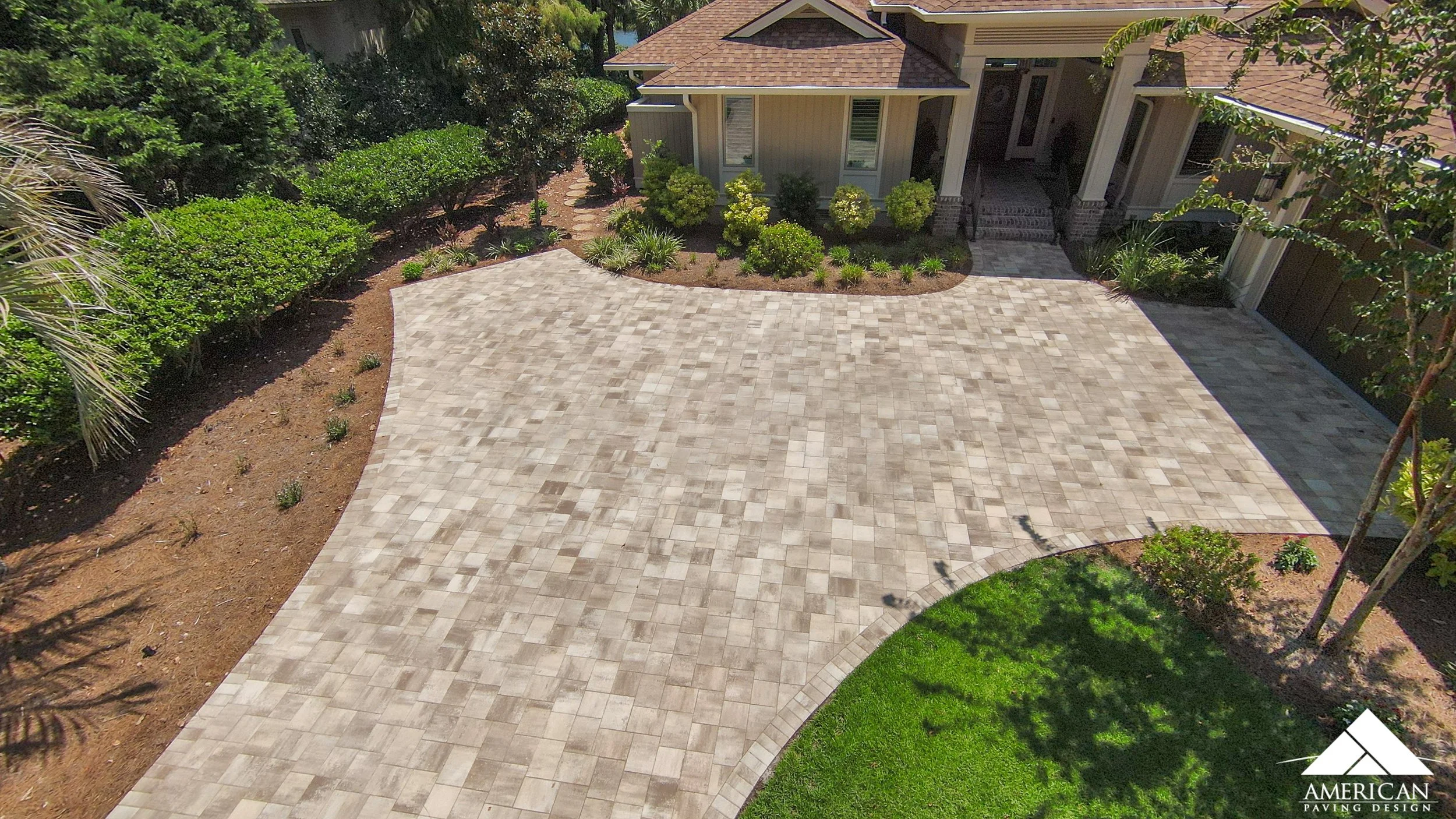
From a resale standpoint, paver driveways offer a significant curb-appeal advantage. They signal quality construction, thoughtful design, and long-term durability. For luxury homes and custom builds, pavers are often considered a premium upgrade rather than an optional feature.
The Bottom Line
Concrete may cost less upfront, but paver driveways consistently outperform concrete in durability, drainage, maintenance, and overall value. When installed correctly, a paver driveway isn’t just a surface—it’s a structural system built to last.

Concrete Driveways: The Short-Term Option
Concrete driveways are often chosen because of their lower upfront cost and faster installation. However, concrete is a rigid material. Over time, soil movement, moisture changes, and temperature fluctuations cause cracking. Once a concrete driveway cracks, repairs are typically visible and rarely blend seamlessly with the original surface.
Concrete also struggles with drainage. Water tends to sit on the surface or run toward garages and foundations, increasing the risk of erosion, staining, and structural issues.
Paver Driveways: Built for Performance
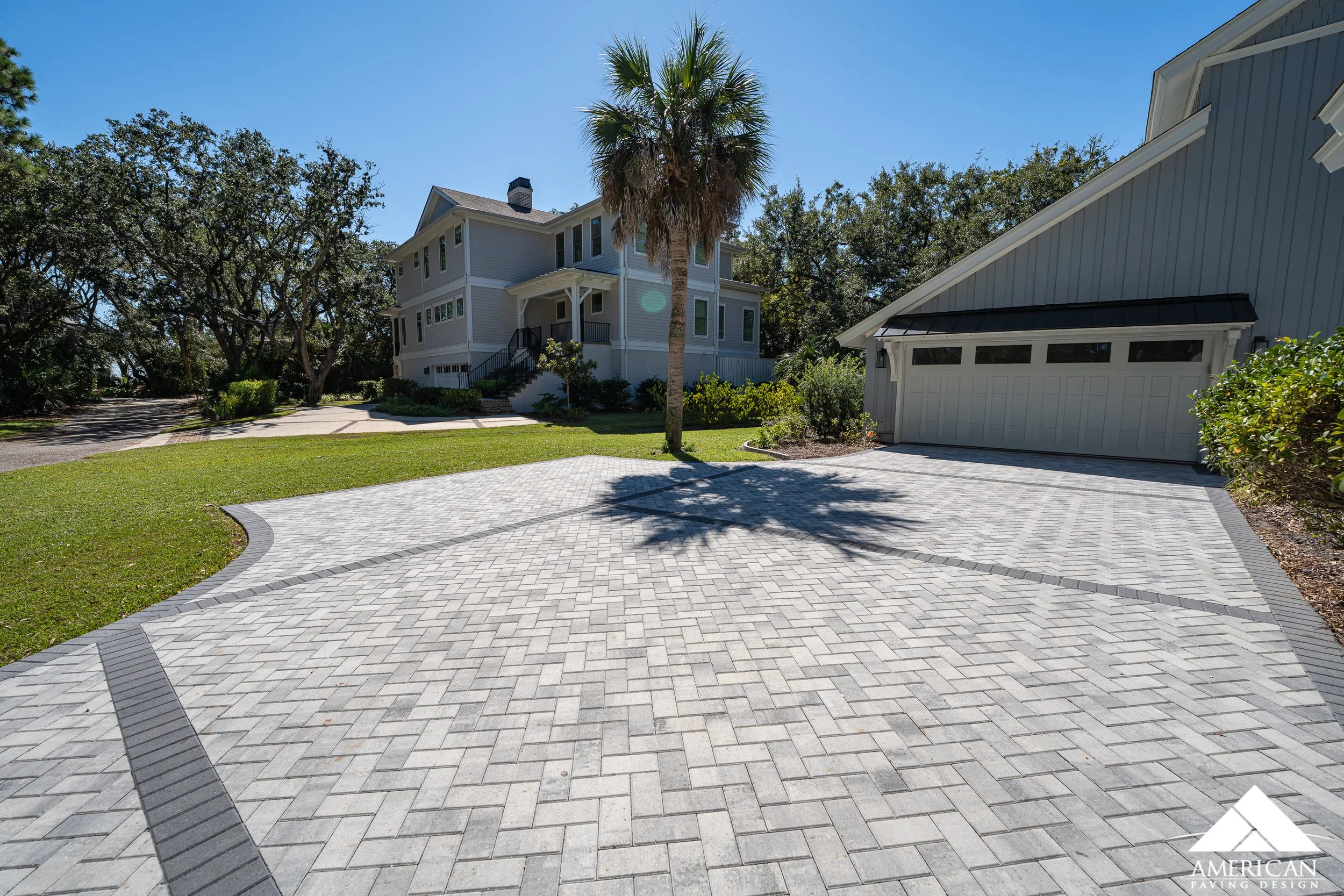
Paver driveways are designed as flexible systems rather than solid slabs. Individual pavers sit on a compacted base that allows slight movement without cracking. This flexibility makes pavers ideal for coastal and Lowcountry environments where soil conditions constantly shift.
Another major advantage is drainage. Many paver systems—especially permeable pavers—allow water to filter through the surface naturally. This reduces pooling, runoff, and long-term base failure.
Maintenance & Longevity
When a concrete driveway fails, replacement is often the only solution. With pavers, repairs are localized. If a section ever settles or becomes damaged, individual pavers can be removed and reset without disturbing the rest of the driveway.
Pavers also maintain their appearance longer. Colors are manufactured throughout the paver—not just on the surface—so fading and wear are far less noticeable over time.