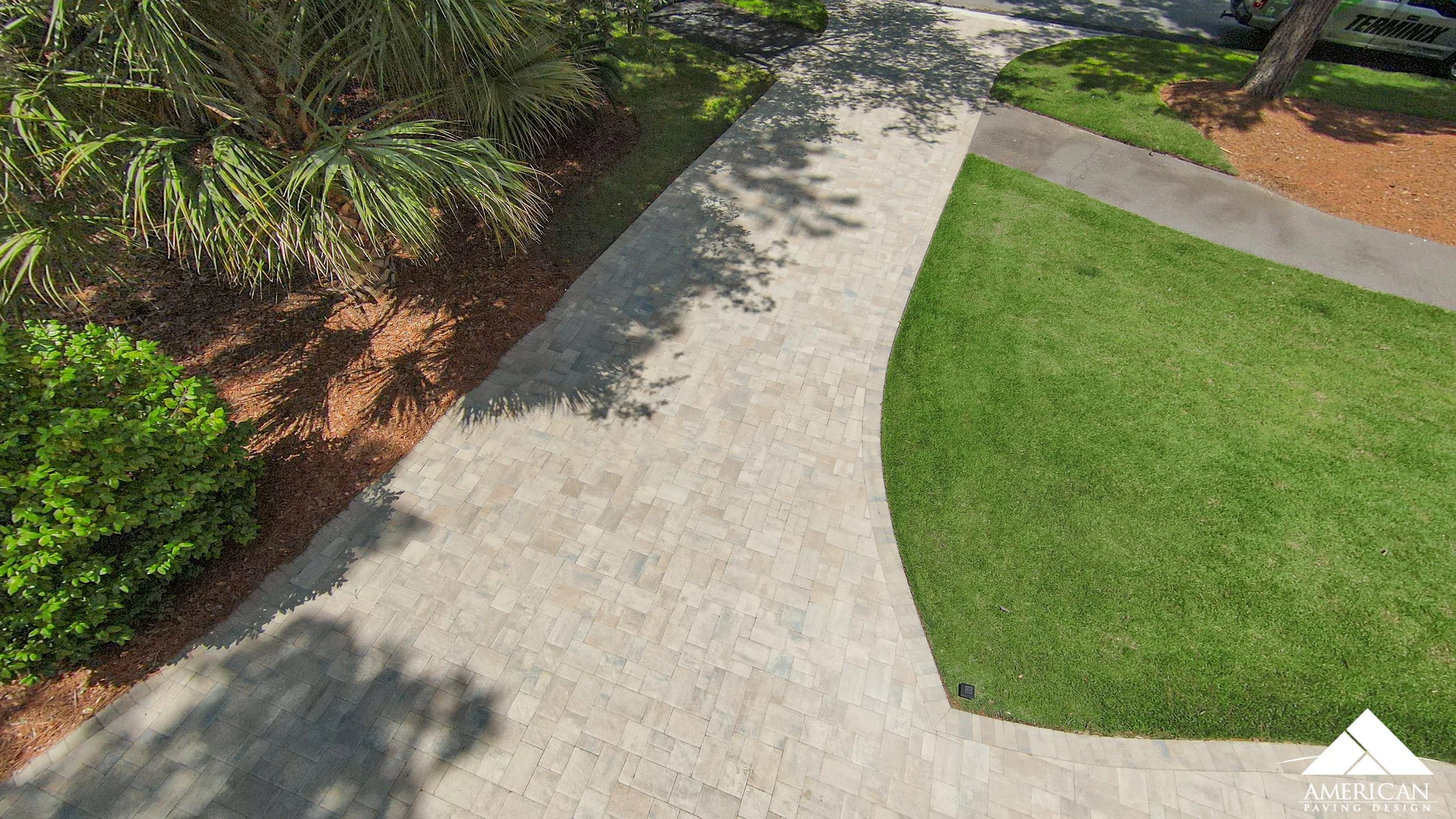
Driveway Drainage Problems: How Pavers Can Help Manage Water Around Your Home
Why Is Water Pooling on My Driveway?
After a Lowcountry rainstorm, take a look at your driveway.
Does water disappear—or do you have puddles sitting in the same locations every time?
Standing water and excessive runoff can indicate a drainage or grading issue. And simply replacing the surface without considering where that water will go may leave you with the same problem on a brand-new driveway.
That's why drainage should be part of the driveway design conversation from the beginning.
What Causes Driveway Drainage Problems?
Several conditions can contribute to driveway water problems.
Low areas can develop as surfaces settle. The driveway may have been installed with inadequate slope, or surrounding landscaping may have changed how water travels across the property.
Large impervious surfaces also create runoff because water cannot penetrate through the pavement.
In areas that experience substantial rainfall, that water has to be managed somewhere.
How Can a Paver Driveway Improve Drainage?
A traditional paver driveway is still designed to move surface water through appropriate grading.
During a driveway replacement, contractors have an opportunity to evaluate elevations and determine how water should travel across or away from the paved area.
This can be especially valuable when an old driveway has developed depressions or other areas where water collects.
Drainage Should Be Designed, Not Discovered Later
One of the biggest mistakes homeowners can make is focusing exclusively on the appearance of their new driveway.
Color and pattern matter—but so do water movement, elevations and the system underneath the pavers.
American Paving Design designs and installs traditional and permeable paver driveways throughout Bluffton, Hilton Head Island, Beaufort, Charleston, Mount Pleasant, Savannah and surrounding coastal communities.
If you're dealing with standing water, an aging driveway or a surface that no longer drains correctly, start by evaluating the entire driveway system—not just what you see on top.
A beautiful driveway should look good after the storm, too.
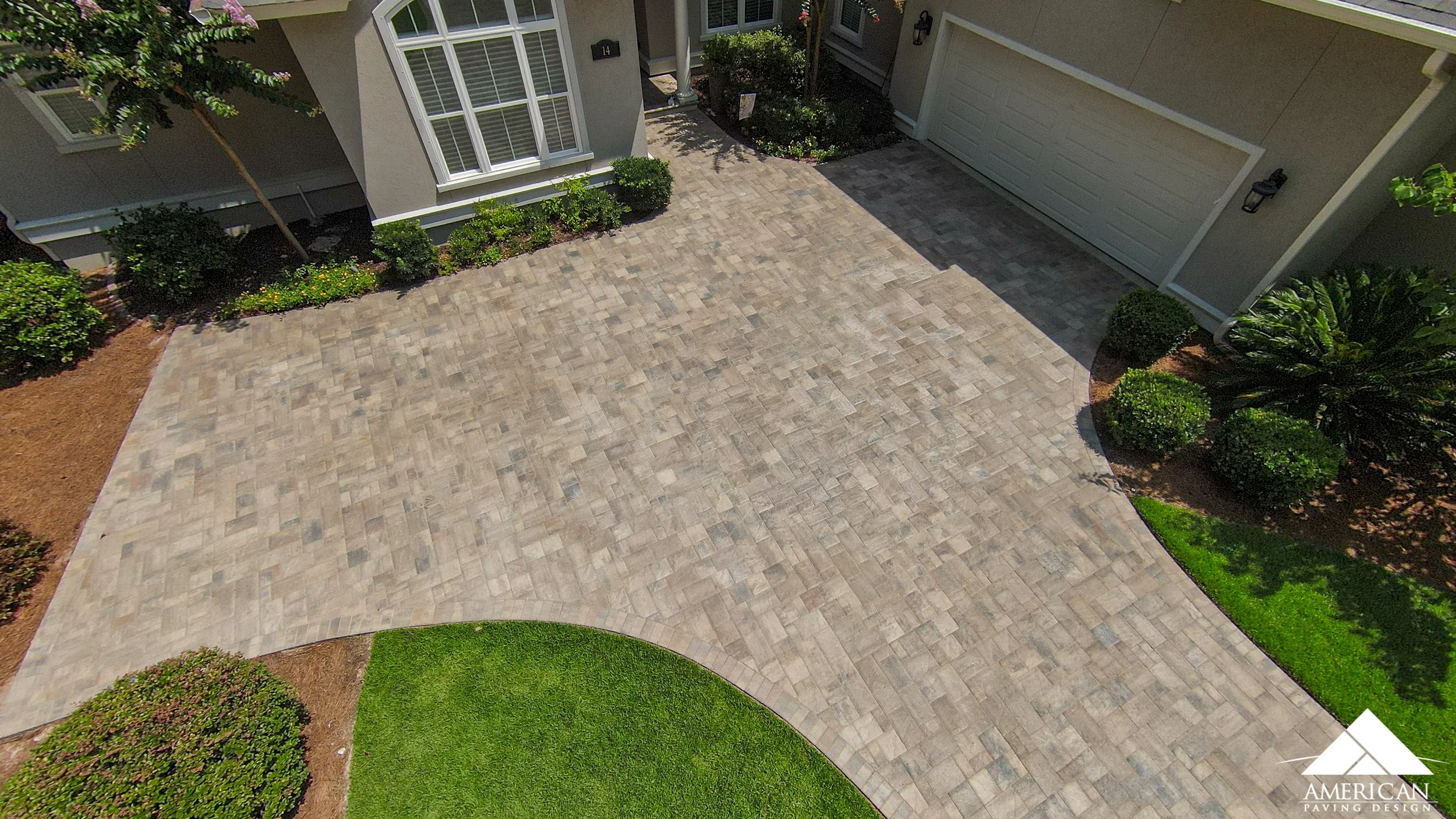
What Are Permeable Pavers?
For some properties, a permeable paver driveway may provide another solution.
Unlike a conventional impervious surface, permeable interlocking concrete pavement is designed to allow water to enter through aggregate-filled joints and move into an open-graded stone system underneath.
Rather than directing all rainfall across the driveway surface, the pavement system can temporarily store and infiltrate water.
That can help reduce surface runoff and standing water when the system is appropriate for the site and properly designed.
Are Permeable Pavers Right for Every Driveway?
Not necessarily.
The property needs to be evaluated.
Soil, elevations, drainage patterns, intended use, local requirements and surrounding site conditions can influence whether a permeable system makes sense.
Permeable pavers also look different from conventional tightly jointed pavers. The wider aggregate-filled joints are a functional part of the system and should be understood before choosing the product.