
Why Does My Driveway Keep Sinking? Causes & Solutions in the Lowcountry
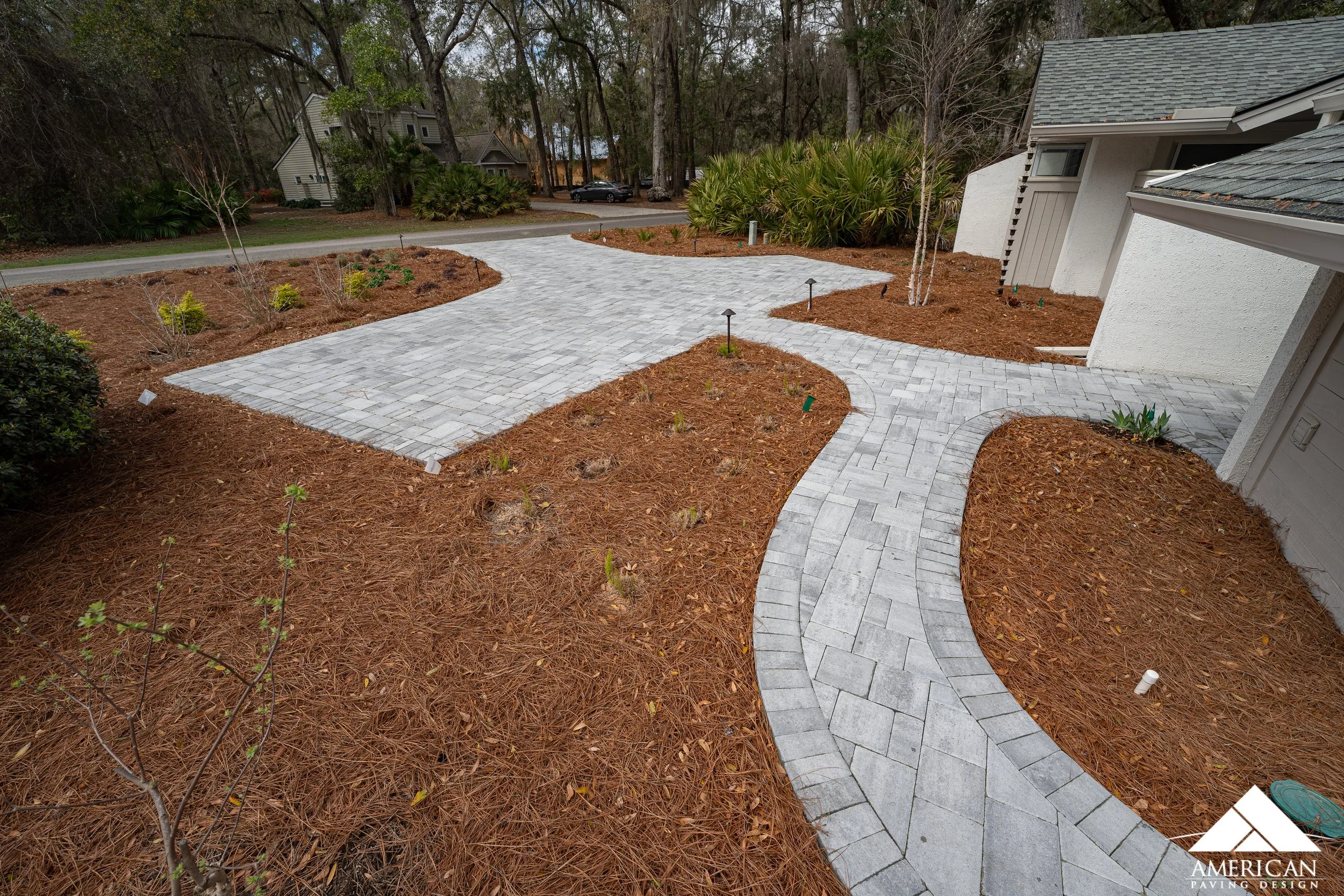
Why Pavers Can Be an Advantage
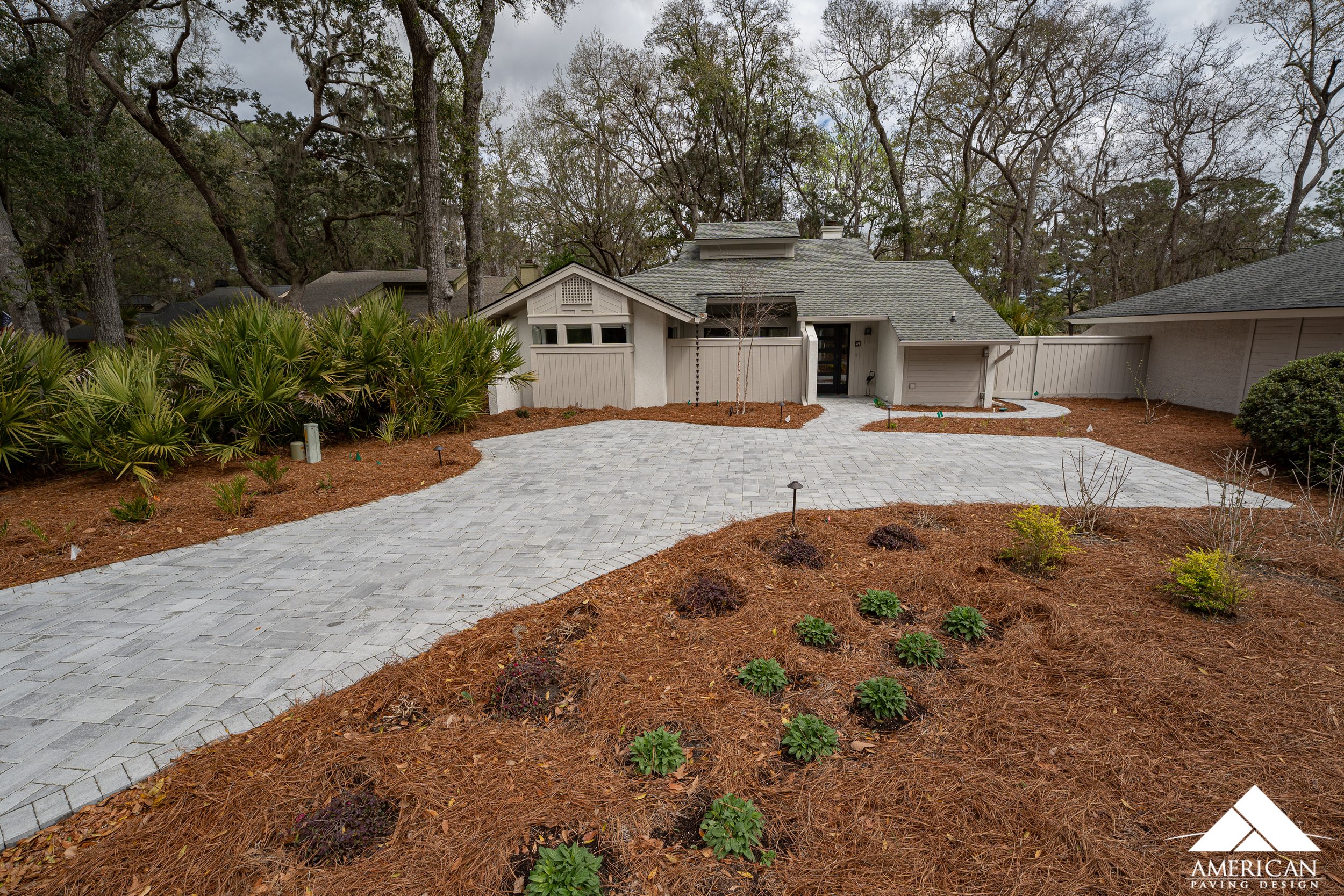
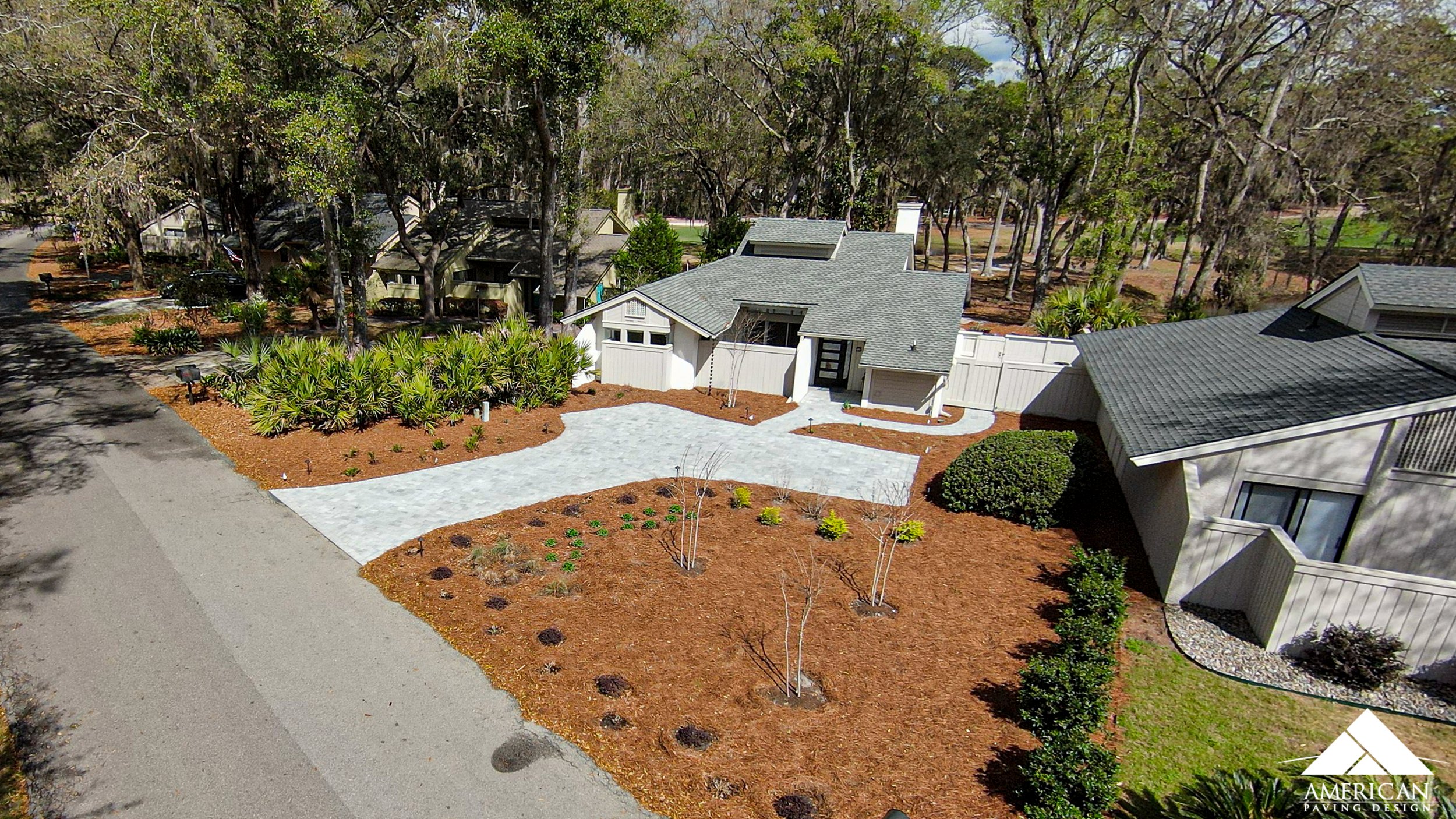
Interlocking concrete pavers provide an important benefit when ground movement or future access becomes an issue: individual sections can often be removed and reinstalled.
A poured concrete driveway behaves as one large slab. When significant cracking occurs, repairs may remain visible.
Paver systems consist of individual units installed over a prepared base. If a localized area requires correction, contractors can often remove the affected pavers, address the underlying problem and reinstall the surface.
What About Permeable Pavers?
Properties with stormwater concerns may also benefit from evaluating permeable pavers.
Permeable paver systems are designed differently from traditional paver installations. Wider joints and an open-graded aggregate system allow water to move through the pavement rather than simply running across the surface.
They can be an excellent solution for certain properties, but the entire system—not just the paver itself—must be properly designed and installed.
Why Is My Driveway Sinking?
Have you noticed a low spot developing in your driveway? Maybe water suddenly collects in an area that used to drain properly, or one section appears lower than another.
A sinking driveway isn't just an appearance problem. It can indicate movement or failure occurring beneath the surface.
And repeatedly repairing the surface without understanding the cause may not solve the underlying issue.
Poor Base Preparation
One potential cause of driveway settlement is an improperly prepared base.
Driveways carry repeated vehicle loads every day. If the material beneath the driveway wasn't properly installed and compacted for those loads, movement can occur over time.
That movement can eventually appear at the surface as sinking, cracking or uneven areas.
This is why professional driveway construction starts below the material you actually see.
Soil Movement
Lowcountry properties can present unique site conditions.
Soil characteristics vary from property to property, and changes beneath a driveway can contribute to settlement. Water movement and erosion can also affect the supporting material below a paved surface.
Before replacing a sinking driveway, contractors should consider why the existing surface moved in the first place.
Drainage Problems
Water is another major factor.
If stormwater repeatedly flows beneath or alongside a driveway, it can affect the surrounding base or soil. Poor grading may also allow water to collect in low areas.
Those puddles aren't necessarily just an inconvenience—they can be a clue that the driveway's elevations or supporting structure need attention.
Repair It or Replace It?
One small isolated issue may be repairable.
However, widespread sinking, extensive cracking, recurring puddles and repeated repairs may indicate that it's time to evaluate the entire driveway.
American Paving Design helps homeowners throughout Bluffton, Hilton Head Island, Beaufort, Charleston, Mount Pleasant, Savannah and surrounding areas design driveway systems around the conditions of their property.
If you're tired of repairing the same driveway problems, it may be time for a different approach.
Stop repairing. Start replacing.